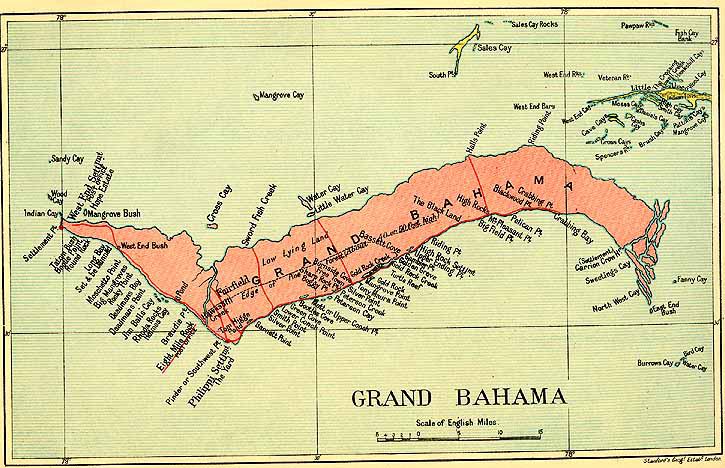
- Other Communities in Grand Bahama Island
- Mclean’s Town | West Grand Bahama | Freetown Grand Bahama | Mather Town
- Other Communities in Grand Bahama Island
- West Grand Bahama Settlements
- Central & Suburbs of Freeport
- East Grand Bahama Settlements & Offshore Cays
- Plan Your Visit
- Here are fun and interesting facts about these towns, settlements, and regions across Grand Bahama Island:
- McLean’s Town / McLeans Town (McLean’s Town, Grand Bahama Island)
- West Grand Bahama
- Eight Mile Rock, Bahamas
- Freeport
- Mather Town
- Freetown, Grand Bahama (Freetown, Bahamas)
- East Grand Bahama
Other Communities in Grand Bahama Island
Mclean’s Town | West Grand Bahama | Freetown Grand Bahama | Mather Town
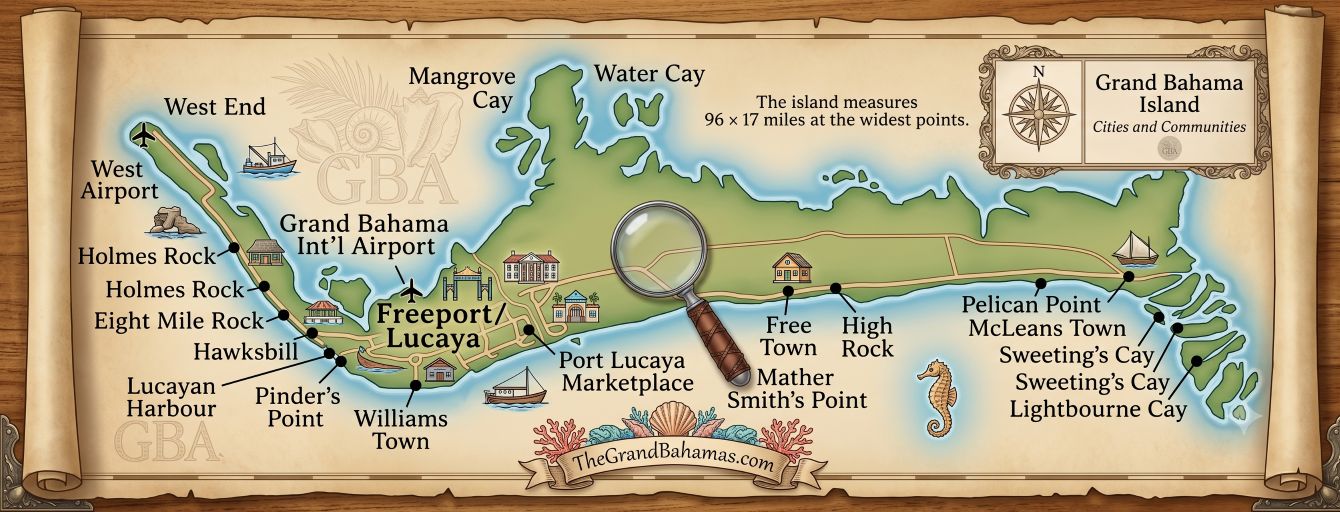
Other Communities in Grand Bahama Island
Beyond the bustling commercial hubs, Grand Bahama Island is home to a rich mosaic of historical settlements, coastal villages, and pristine offshore cays. While Freeport serves as the main industrial and tourism center, exploring the outer communities of West Grand Bahama and East Grand Bahama offers an authentic look into Bahamian culture, history, and untouched natural beauty.
Journey beyond Freeport to explore Grand Bahama Island’s distinct settlements. Learn about the rich history of Freetown, the local culture of Eight Mile Rock, and the coastal beauty of East Grand Bahama’s fishing villages.
Advertisement
End Advertisement
West Grand Bahama Settlements
The western district features some of the oldest historic sites and vibrant coastal communities on the island.
- West End: Situated at the westernmost tip, West End is the historic capital of Grand Bahama. As the island’s oldest settlement, this famed fishing village holds a storied past as a liquor smuggling hub during the Prohibition era.
- Deadman’s Reef: Home to Paradise Cove, this area offers access to premier snorkeling reefs. The beachfront is also one of the most significant archaeological sites on Grand Bahama Island, where Lucayan Indian artifacts dating back to 1200–1300 AD were discovered.
- Holmes Rock: A quaint settlement known for its unique subterranean cave system located behind a popular local venue. At low tide, the surrounding area naturally produces fresh water, which shifts to salt water at high tide.
- Eight Mile Rock, Bahamas: Located just west of the commercial center, Eight Mile Rock, Bahamas is the largest settlement outside of Freeport. It consists of a continuous string of coastal neighborhoods spanning eight miles of solid limestone shoreline.
Advertisement
End Advertisement
Central & Suburbs of Freeport
Surrounding Freeport, several traditional villages preserve their local roots alongside modern developments.
- Hawksbill: Situated along Hawksbill Creek, this residential area was originally built for workers following the landmark Hawksbill Creek Agreement, which paved the way for the development of Freeport.
- Pinder’s Point: Composed of four interconnected coastal hamlets, Pinder’s Point maintains its traditional Bahamian lifestyle just minutes from the main resort areas.
- Williams Town: Founded by freed slave Joseph Williams, this historic community sits on communal “generation land.” Key historic sites here include an ancient burial ground and a natural boiling hole.
- Smith’s Point: Famous for hosting the traditional Wednesday Night Fish Fry, this vibrant village celebrates authentic Bahamian food and heritage.
- Mather Town: Located directly across the channel from Smith’s Point, Mather Town is a charming residential enclave whose traditional homes offer a peaceful contrast to the neighboring urban areas.
Advertisement
End Advertisement
East Grand Bahama Settlements & Offshore Cays
Traveling into East Grand Bahama reveals secluded shorelines, eco-tourism destinations, and quiet fishing outposts.
- Freetown, Grand Bahama: Established as a sanctuary for freed slaves in 1834, Freetown, Bahamas (also known historically as Old Freetown) is steeped in heritage. It is home to The Hermitage, built in 1901, which stands as the oldest building on Grand Bahama.
- High Rock: Named for its prominent 30-foot rocky bluff along the ocean, High Rock features colorful timber-framed homes supported primarily by commercial fishing and energy sector operations.
- McLean’s Town (McLeans Town): Situated at the eastern tip of the mainland, McLean’s Town—also spelled McLeans Town—is famous for its annual Conch Cracking Contest held every October. Local residents rely heavily on fishing and running water-taxi ferries to the surrounding eastern cays.
- Sweeting’s Cay: Positioned 55 miles east of Freeport, this boat-only offshore island stretches roughly one mile and harbors a tight-knit fishing community.
- Water Cay: Nestled in northern Grand Bahama Island, Water Cay features abundant natural freshwater springs and was originally settled over a century ago by families from surrounding cays.
- Deep Water Cay: Located just off the coast from McLean’s Town Grand Bahama Island, this world-renowned bonefishing destination is surrounded by roughly 250 square miles of shallow flats.
- Lightbourne Cay: Uninhabited and accessible exclusively by boat, this pristine cay east of Sweeting’s Cay offers secluded beaches and ideal shallow-water snorkeling.
Advertisement
End Advertisement
Plan Your Visit
Explore flights, resort accommodations, and historical sites across Grand Bahama Island:
Advertisement
End Advertisement
Here are fun and interesting facts about these towns, settlements, and regions across Grand Bahama Island:
McLean’s Town / McLeans Town (McLean’s Town, Grand Bahama Island)
- World-Famous Conch Cracking Festival: McLean’s Town hosts the iconic annual Conch Cracking Competition every autumn (held on National Heroes Day/Columbus Day weekend), where locals compete to see who can extract and clean conch meat the fastest.
- The End of the Road: McLean’s Town sits at the easternmost tip of Grand Bahama’s main highway, acting as the primary ferry drop-off and water-taxi hub to offshore cays like Deep Water Cay and Sweeting’s Cay.
West Grand Bahama
- The Prohibition Rum-Running Hub: During American Prohibition in the 1920s, West End (the capital of West Grand Bahama) was a major operational center for smuggling liquor into the United States due to its close proximity to the Florida coast.
- Oldest Settlement: West End is officially the oldest city and settlement on Grand Bahama Island.
Eight Mile Rock, Bahamas
- Named After Pure Limestone: It gets its name from a continuous 8-mile stretch of solid limestone rock along its coastline.
- The Largest Settlement: Outside of the main Freeport/Lucaya metropolitan center, Eight Mile Rock is the largest settlement on the entire island and is made up of 11 distinct sub-neighborhoods (such as Hepburn Town, Bartlett Hill, and Seagrape).
Advertisement
End Advertisement
Freeport
- A Built-From-Scratch City: Unlike most historic Bahamian towns that grew organically, Freeport was custom-planned and built starting in 1955 after financier Wallace Groves signed the Hawksbill Creek Agreement.
- Tax-Free Zone Status: Under the Hawksbill Creek Agreement, business owners and residents in Freeport pay no income, capital gains, or property taxes.
Mather Town
- A Channel-Divided Enclave: Mather Town sits directly across a narrow channel from Smith’s Point.
- Quaint Beachfront Vibe: Despite being right near the main resort corridors, Mather Town Beach remains a quiet, soft white-sand spot famous for local spots like Margarita Villa where visitors mingle right by the sea.
Advertisement
End Advertisement
Freetown, Grand Bahama (Freetown, Bahamas)
- Historic 1834 Roots: Freetown earned its name because it was the very first community on Grand Bahama where former slaves settled after total emancipation was declared in 1834.
- Home of “The Hermitage”: Freetown houses the oldest standing structure on Grand Bahama Island—The Hermitage, built in 1901 originally as a Baptist church before later being used by a Trappist monk.
East Grand Bahama
- Ecotourism & Unspoiled Nature: East Grand Bahama represents the rugged, natural side of the island—dominated by pine forests, extensive mangrove systems, and vast blue holes.
- Gateway to World-Class Bonefishing: The flat waters off East Grand Bahama cover hundreds of square miles and attract world-renowned anglers for fly-fishing.
Advertisement
End Advertisement